
CPA Versus CPL Campaigns: Which Pays Better?
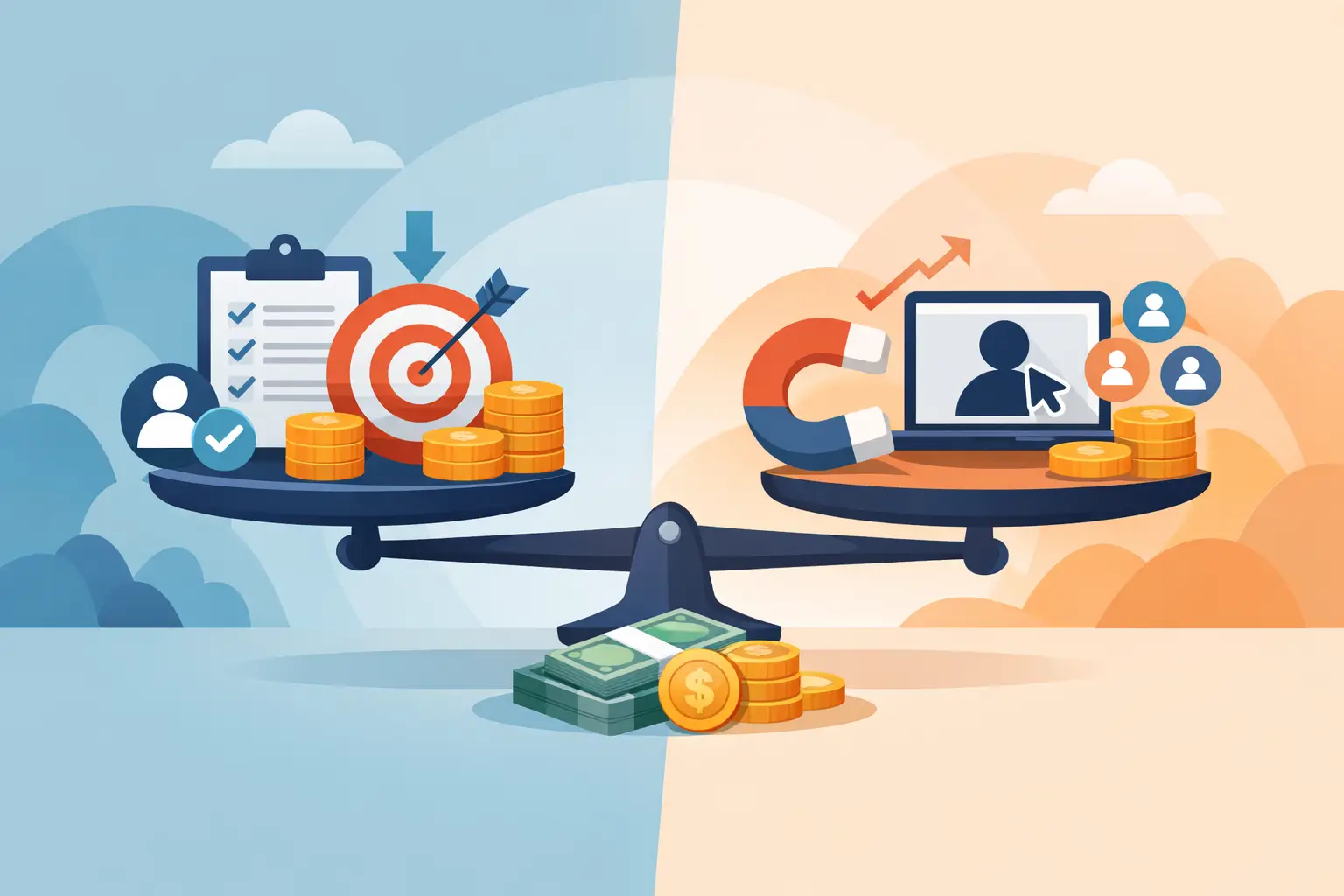
A campaign can look profitable at launch and still disappoint once lead quality, approval rates, and payment timing enter the picture. That is why the choice between CPA versus CPL campaigns is not simply about selecting the higher payout. It is about matching the conversion event to your traffic, sales process, and tolerance for risk.
For affiliates, the right model determines how quickly traffic can be monetized and how reliably earnings can scale. For advertisers, it determines whether the affiliate channel delivers real customers or a pipeline of leads that still require work. A clear offer structure, transparent tracking, and confirmed conversion rules make both models more effective.
CPA versus CPL campaigns: the core difference
CPA means cost per acquisition. The advertiser pays when a user completes a defined, valuable action. Depending on the offer, that could be a completed sale, approved account, funded application, paid subscription, installation, or another event that represents a genuine acquisition.
CPL means cost per lead. Payment is triggered earlier in the customer journey, usually when a user submits contact information, requests a quote, creates a trial account, books a consultation, or completes a qualified form.
The practical difference is simple: CPA rewards the final or near-final business outcome, while CPL rewards the creation of a sales opportunity. Neither model is automatically better. The stronger choice depends on what happens after the initial conversion.
How CPA campaigns work
A CPA campaign places more conversion risk on the affiliate. The user may click an ad, read a review, compare options, and even begin checkout, but the affiliate is paid only when the required acquisition event occurs.
That risk is balanced by a higher potential payout. A completed insurance policy, software subscription, financed purchase, or first deposit has more immediate value to an advertiser than an email address alone. Affiliates that can send high-intent users through well-matched content, search traffic, email audiences, or paid media often prefer CPA offers because a smaller number of approved conversions can generate meaningful revenue.
For advertisers, CPA is especially attractive when acquisition can be verified clearly. It provides closer alignment between affiliate spend and revenue, but it can limit partner participation if the funnel is long, the checkout process is weak, or conversion validation takes too long.
How CPL campaigns work
CPL campaigns reduce the distance between the visitor’s first action and the affiliate’s paid conversion. A user does not necessarily need to buy. They need to provide information that meets the campaign’s qualification requirements.
This structure often works well in verticals with considered purchases or sales-assisted journeys, including insurance, education, home services, B2B software, loans, and high-ticket consumer services. A prospect may need several calls, demos, or follow-up emails before becoming a customer. Paying for a qualified lead lets the advertiser keep affiliate acquisition active while its sales team handles the next stage.
The risk shifts toward the advertiser. If lead validation is loose or follow-up is slow, a large volume of paid leads can turn into little revenue. Strong CPL programs define qualification rules upfront, filter fraud, and provide prompt feedback on lead quality.
Compare the economics beyond the listed payout
A $100 CPA payout is not necessarily more profitable than a $15 CPL payout. The relevant number is expected earnings per click after approval rates, conversion rates, reversals, and traffic cost.
For example, an affiliate may send 1,000 visitors to a CPA offer. If 2% complete the approved action, earnings are $2,000 on a $100 payout. On a CPL offer, 8% of visitors may submit valid leads at $15 each, producing $1,200. In that scenario, CPA wins.
But the equation changes if the CPA funnel converts at 0.7%, the advertiser has strict approval rules, or the customer must take several steps before the conversion is confirmed. The CPL offer may then generate steadier cash flow and give the affiliate more room to test placements, audiences, and creative.
Advertisers should use the same discipline from the other side. The question is not whether a lead cost looks low. It is whether the lead becomes revenue at an acceptable rate. If a $20 lead converts to a $500 customer one time out of 10, the effective acquisition cost is $200 before internal sales costs. That may be excellent or unsustainable depending on margin and customer lifetime value.
When affiliates should choose CPA
CPA campaigns are usually the better fit when traffic arrives with clear purchase intent. Product comparison pages, discount-focused content, high-intent search campaigns, retargeting, and established niche audiences can perform well because users are already close to a decision.
They also suit affiliates with the ability to pre-sell. A detailed review that explains pricing, use cases, limitations, and alternatives can remove uncertainty before the visitor reaches the advertiser’s site. The more effectively the content qualifies the click, the less the affiliate depends on a perfect advertiser funnel.
Choose CPA carefully when approval windows are long. Revenue may look strong in reporting but remain unconfirmed for weeks. Ask how acquisitions are tracked, what causes reversals, whether there is a hold period, and when approved conversions become payable. Reliable payout operations matter as much as the headline rate.
When affiliates should choose CPL
CPL is often a practical choice for broad content audiences and campaigns where visitors are interested but not ready to purchase immediately. A user researching mortgage rates, business software, online courses, or local services may be comfortable requesting information before committing money.
This model can also be easier to optimize at scale. Landing page completion is generally more frequent than a final sale, so affiliates receive faster signals about traffic quality. That does not mean lead generation is easy. Low-friction forms can attract low-intent submissions, duplicate entries, and invalid data. The goal is qualified volume, not form-fill volume.
Before scaling a CPL offer, verify what counts as a payable lead. Requirements may include a valid phone number, specific location, unique contact details, consent language, a completed call, or a lead that meets credit or demographic criteria. Clear rules protect both margins and partner relationships.
What advertisers need from each model
Advertisers selecting CPA should make the acquisition path as measurable and conversion-friendly as possible. Affiliates cannot compensate indefinitely for a slow site, unclear offer, broken tracking, or a checkout process that creates friction. Competitive terms help, but conversion rate and transparent validation are what keep quality partners active.
CPL advertisers need a defined lead-handling process. Leads should reach the right sales team quickly, receive timely follow-up, and be tracked through to sale. If affiliates receive no visibility into rejection reasons or downstream performance, they cannot improve the traffic they send.
The best programs share enough data to support optimization without exposing sensitive customer information. Reporting should show clicks, leads or acquisitions, approval status, reversal reasons where appropriate, and payout status. This gives affiliates confidence to scale and gives advertisers a clearer view of partner performance.
Build a smarter test plan
Do not judge CPA or CPL from a few days of clicks. Test each model against a defined traffic source, audience segment, and landing-page angle. Keep the comparison fair by measuring approved conversions rather than raw tracked events.
For affiliates, track earnings per click, lead or acquisition rate, approval rate, reversal rate, time to confirmation, and net profit after traffic costs. A campaign with a lower initial payout may be the better business if approvals are consistent and the offer converts reliably.
For advertisers, measure not only volume but lead-to-sale rate, revenue per partner, refund or cancellation behavior, and customer lifetime value. High-volume affiliates are valuable only when their customers remain commercially valuable after the first conversion.
A performance network can simplify this process by centralizing offer discovery, tracking, payout terms, and direct account support. Indoleads gives professional partners access to a wide range of advertiser offers while helping both sides work from clearer conversion data and commercial terms.
The model should follow the customer journey
Choose CPL when the first meaningful value is a qualified conversation and your sales process can turn that conversation into revenue. Choose CPA when the final acquisition can be tracked accurately and the customer journey is short enough for affiliates to optimize toward a confirmed result.
The strongest campaigns do not treat payout models as labels. They treat them as agreements on what performance is worth. When the event is clear, the tracking is trusted, and the economics work for both sides, affiliates can scale with confidence and advertisers can buy growth without guessing.