
CPA Offers vs Revshare Programs Compared
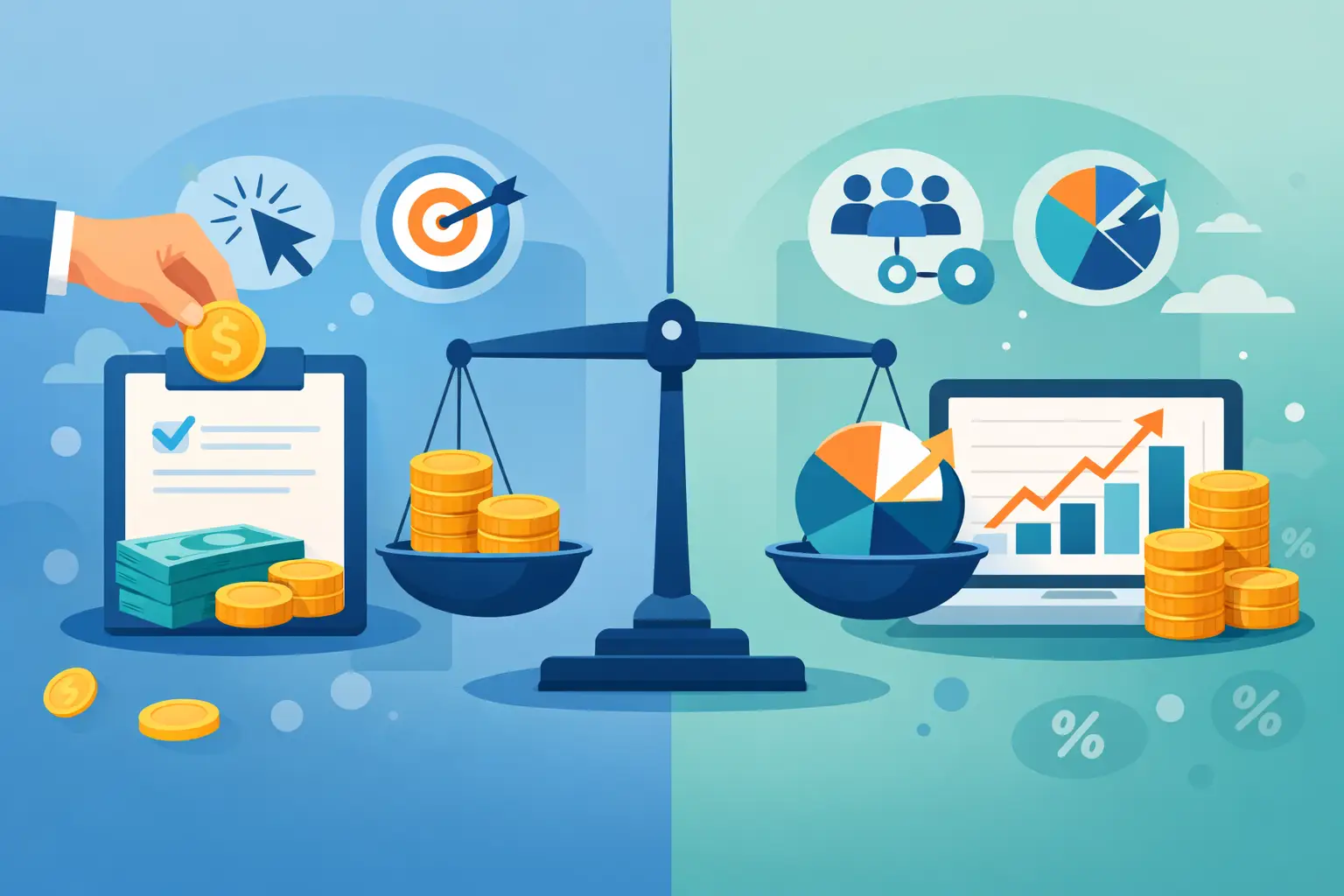
A campaign can look profitable in a dashboard and still create a cash-flow problem. That is the real decision behind cpa offers vs revshare programs. One model can pay you a fixed amount as soon as a qualified action is approved. The other can keep paying long after the first conversion, but only if the customer remains valuable.
For professional affiliates, publishers, and media buyers, the best choice is rarely about which model has the higher advertised payout. It is about conversion quality, approval rules, customer behavior, traffic costs, and how quickly you need capital back to scale. For advertisers, the same decision affects acquisition risk, partner incentives, and the predictability of customer acquisition costs.
CPA offers vs revshare programs: the core difference
A CPA offer pays a fixed commission when a defined action takes place. That action may be a completed sale, a verified lead, an app install, a subscription trial, or another advertiser-approved event. If an offer pays $40 per approved sale, your commission remains $40 whether the customer spends $80 or $800 over the next year.
Revshare, short for revenue share, pays a percentage of revenue generated by the customer you referred. Depending on the vertical and offer terms, that percentage may apply to the first order, recurring subscription revenue, net revenue after refunds, or the customer’s ongoing lifetime value. A 20% revshare can be worth far more than a fixed CPA payout when customer retention and average order value are strong.
The trade-off is straightforward. CPA creates clearer, faster earnings per conversion. Revshare creates greater upside, but its final value is less certain and may take longer to materialize.
Why CPA offers often win on speed and control
CPA offers are built for performance marketers who need to model campaigns precisely. If you know your approved conversion rate and payout, you can set a maximum cost per acquisition, test traffic sources, and make scaling decisions without waiting months to learn what a customer is worth.
Consider a paid campaign that generates 100 clicks at a total cost of $120. If the offer converts four users at a $50 CPA payout, gross commission is $200. Even after accounting for approval rates and traffic cost, the initial profitability is easy to estimate. That clarity matters when you are reinvesting daily budgets.
CPA is especially practical when the advertiser has a long sales cycle, limited retention data, or a product with a single transaction. It also fits content publishers promoting products with clear purchase intent, such as insurance quotes, travel bookings, software trials, and ecommerce categories.
Still, a high CPA number is not automatically a strong offer. Affiliates should review the full commercial picture: the approved action, tracking window, geo restrictions, allowed traffic, validation period, reversal policy, and payout schedule. A $100 payout with a restrictive approval process can underperform a $35 offer that converts consistently and confirms quickly.
For advertisers, CPA shifts more acquisition risk toward the partner. The brand pays only for the stated result, making forecasting easier. However, fixed payouts can limit an affiliate’s incentive to keep improving customer quality after the first conversion. That is where revshare may create better long-term alignment.
Where revshare programs create larger upside
Revshare programs reward affiliates for delivering customers who keep spending. They are most compelling in categories with recurring billing, repeat purchases, deposits, upgrades, or high lifetime value. Think subscription software, online services, membership businesses, travel platforms with repeat use, and ecommerce brands with strong replenishment behavior.
A customer who begins with a $20 monthly subscription might produce a modest first-month commission. If that customer stays for 12 months, upgrades, or buys additional products, the referral can outperform a one-time CPA by a wide margin. Content creators with loyal audiences often benefit from this model because their recommendations can drive higher-intent customers who remain engaged.
The challenge is timing. A revshare campaign may be profitable over six months while appearing weak in its first two weeks. That can be difficult for media buyers funding campaigns from operating cash flow. It can also complicate optimization because you need enough data to distinguish a low-quality traffic source from a profitable source that simply has delayed revenue.
Read the revenue definition carefully. A stated percentage of gross revenue and the same percentage of net revenue are very different commercial terms. Net revenue can exclude taxes, refunds, payment processing costs, bonuses, discounts, chargebacks, or other deductions. Recurring commissions may also have a duration limit, a customer eligibility rule, or a cap.
For advertisers, revshare can be a disciplined way to acquire customers. Payment rises when real revenue rises, and affiliates have a reason to focus on qualified users rather than volume alone. The advertiser must provide reliable reporting, however. Without transparent data on sales, refunds, and recurring revenue, partners cannot confidently invest in promotion.
A practical comparison for campaign planning
| Factor | CPA offers | Revshare programs | | — | — | — | | Commission structure | Fixed payment per approved action | Percentage of customer revenue | | Revenue timing | Usually faster and more predictable | Often delayed and variable | | Best for | Fast testing, paid traffic, one-time actions | Recurring revenue and high-LTV customers | | Main risk | Reversals, caps, and lower upside | Slow payback and unclear revenue calculation | | Optimization focus | EPC, approval rate, conversion rate, CPA | Retention, average order value, customer lifetime value |
Neither column is universally better. A publisher with evergreen search traffic may be comfortable waiting for recurring commissions. A media buyer operating on tight test budgets may need the shorter feedback loop of CPA. The right answer depends on the economics behind the offer and the resources behind the campaign.
How to choose the right model for your traffic
Start with your financial objective. If you need to recover ad spend quickly, prioritize a reliable CPA offer with transparent approval rules and a realistic payout. Calculate expected earnings using approved conversions, not clicks or raw leads. A campaign that earns $10 EPC before reversals may deliver much less after validation.
If you own an audience, email list, comparison site, or search position that produces consistent high-intent traffic, evaluate revshare seriously. Your advantage is not only the first conversion. It is the trust and relevance that can drive customers who renew, purchase again, and generate more revenue over time.
Next, assess your ability to carry delayed returns. A profitable revshare program still requires working capital if you are paying for traffic now and receiving meaningful commissions later. Set a payback window before launching. For example, decide whether the campaign must recover its cost within 30, 60, or 90 days, then compare that threshold against conservative retention assumptions.
Finally, test the offer instead of relying on headline terms. Run a controlled traffic segment, track conversion quality, and compare confirmed earnings against your projected model. Keep separate reporting for device, geo, placement, creative, and traffic source. A blended result can hide a profitable segment or allow an unprofitable one to consume budget.
The terms that protect your margin
The commission model is only one part of the agreement. Strong affiliates verify the tracking cookie duration, attribution logic, validation timeline, reversal reasons, payment threshold, frequency, and whether commissions are affected by promo codes or other channels. On revshare offers, confirm the exact revenue base and the length of recurring eligibility.
Ask a direct question when terms are unclear: what event creates a commission, when is it confirmed, and what can reverse it? Clear answers protect both sides. Affiliates can plan with confidence, while advertisers reduce disputes and attract partners who are focused on sustainable performance.
A network environment can make this process more efficient by centralizing offer terms, tracking data, and support. Indoleads helps professional partners compare campaigns and work from transparent reporting rather than assumptions, which is particularly valuable when evaluating offers across multiple verticals.
Use a portfolio when the economics support it
Many established affiliates do not choose only CPA or only revshare. They use CPA offers to create dependable near-term cash flow and add selected revshare programs where customer lifetime value justifies the wait. This approach can reduce reliance on a single payout schedule while preserving access to larger long-term commissions.
The key is to avoid treating revshare as passive income by default. It still needs active optimization: better pre-sell content, cleaner audience targeting, accurate tracking, and retention-aware messaging. Likewise, CPA campaigns need ongoing monitoring for approval-rate changes, offer caps, and traffic quality issues.
Choose the model that lets you make good decisions with the data and capital you actually have. A reliable CPA campaign can fund growth now; a well-structured revshare partnership can make that growth more valuable over time.